Active Warrants in Multnomah County can be checked instantly online through the county’s public warrant database, letting you confirm whether a warrant is still outstanding or has been recalled. A simple warrant lookup by name or case number pulls details such as the warrant number, issue date, type of warrant, and the issuing court. This fast, searchable record helps you avoid surprise arrests and lets you plan the right legal response.
Active Warrants often raise questions about status, how to resolve them, and what records are available. The Multnomah County Circuit Court’s criminal calendar page offers guidance on contacting the proper authority and understanding the difference between arrest, bench, and failure‑to‑appear warrants. By reviewing the warrant status and any recent updates, you can determine if the record is active, quashed, or sealed before taking next steps.
How to Search Active Warrants
You can check active warrants in Multnomah County using the Oregon Judicial Branch’s public court records system. This search lets you confirm whether someone has an outstanding through the official mugshots logs portal to review warrant, what type it is, and which court issued it. Anyone can use the search tool from a phone or computer with internet access. The records show current warrant status, so you can see if a warrant is still active or has been recalled. Knowing this information helps you avoid surprise arrests and plan the right legal response.
Official Search Portal: https://www.courts.oregon.gov/courts/multnomah/go/pages/criminal-calendaring.aspx
Steps to Search
- Open the Multnomah County Circuit Court criminal calendaring page using the URL listed above.
- Look for the case search or warrant lookup section on the page.
- Pick your search method — search by name, case number, or warrant number.
- Type the full legal name (last, first, middle) or the case number into the search field.
- Press enter or click the search button to pull up matching records.
- Read each result for warrant type, issue date, status, and the issuing court.
- Write down the warrant number and status if you need to contact the court later.
- Call the court at 503-986-5500, option 5, if you have questions about a specific record.
Warrant Search by Name
A name search is the most common way to look for active warrants in Multnomah County. Type the person’s last name first, then first name, then middle name if known. The system will pull up cases tied to that name. You may see several matches, so you compare each result by date of birth or middle name to find the right one. Names that sound alike can show up together, so checking extra details matters. Searching by name works best when you spell the name correctly and include a middle name. Common misspellings can lead to no results. If you know the person’s full legal name, you will get a more accurate search. The Oregon Judicial Branch system stores case data for criminal cases across Multnomah County. Records going back many years are available through this search.
Warrant Search by Case or Reference Number
If you already have a case number or warrant number, you can pull up the record faster. A case number usually looks like “21CR12345” with the year at the start. A warrant number has its own format set by the court clerk. Type the number exactly as it appears on any paperwork. The search will take you straight to that single record. This method saves time when you need to check the status of one specific warrant. It also avoids confusion with other people who share a similar name. Court paperwork, police notices, or attorney letters often list these numbers. Keep them handy when calling the court.
Information Needed for a Warrant Search
You need a few key pieces of information to run a successful search. These include the full legal name, date of birth, case number, or warrant number. The more you have, the faster and more accurate your results will be. You can still search with just a last name, but the results will be wider.
Active Warrant Information
An active warrant record holds key facts that tell you what the warrant is for and who it names. The court keeps these facts so police, lawyers, and the public can look them up. Each field in the record has a clear purpose. You can read them all on the search results page once your search loads.
Warrant Number and Issue Date
The warrant number is a unique ID assigned by the court clerk. It ties the warrant to one court file. The issue date tells you when a judge signed off on the warrant. Both pieces of data show up at the top of the record page. Older warrants can still be active if they were never recalled or quashed.
Person Named on the Warrant
The record lists the legal name of the person the warrant was issued for. It may also show the date of birth or last known address. This helps confirm you are looking at the right person. Names with different spellings can show up if the court has them on file. Always match full name and date of birth when you can.
Warrant Type
The warrant type tells you why the warrant was issued. Common types include arrest, bench, failure-to-appear, and search warrants. The type matters because it decides how police handle the case. The record page shows the warrant type right under the person’s name.
Issuing Court or Authority
The record names the court that issued the warrant. In Multnomah County, this is usually the Multnomah County Circuit Court. Some warrants come from municipal courts in Portland or other cities in the county. The issuing court controls how the warrant is resolved.
Warrant Status
Status tells you whether the warrant is still active, recalled, or quashed. An active warrant means police can still act on it. A recalled or quashed warrant is no longer in force. The status field updates as the court processes the case. Check this field last so you know what action to take next.
Warrant Search Results
Once you run a search, the system shows a list of matching records. Each result gives you a snapshot of a court case or warrant. Knowing how to read these results saves time and prevents mistakes. You should review each piece of data carefully before drawing conclusions.
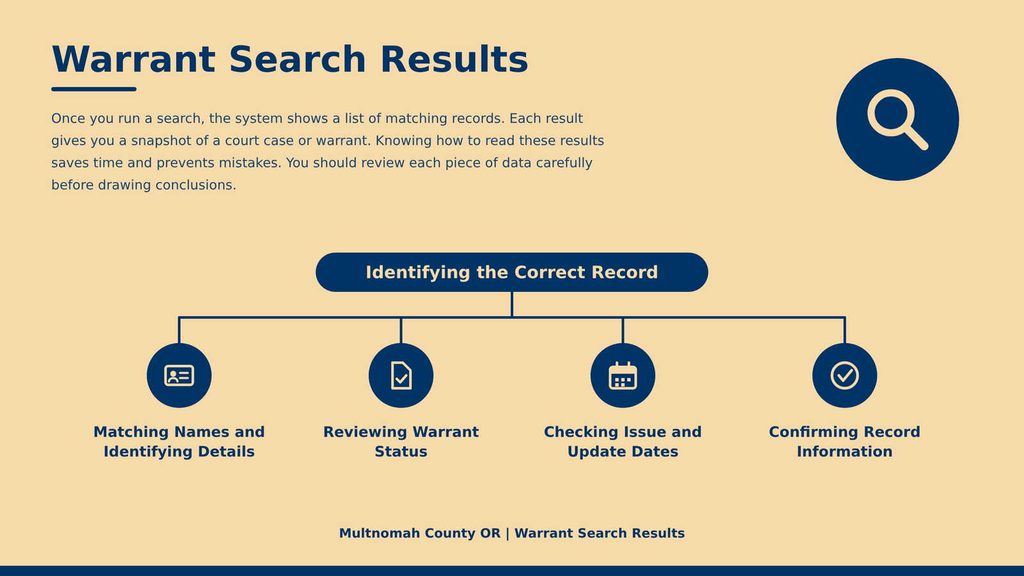
Identifying the Correct Record
Start with the full name and date of birth on each result. These two pieces of data give you the most reliable match. Case type and year also help narrow down the right record. If you see more than one match, look at the issuing court and warrant status to choose the right one.
Matching Names and Identifying Details
Two people can share the same first and last name. Middle names and dates of birth set them apart. The court may list aliases or previous names. Compare these details against what you know about the person. A match with a different middle name or birth date is a different person.
Reviewing Warrant Status
The status line answers one simple question: can police still act on the warrant? Read this field before doing anything else. Statuses can change from active to recalled without warning. The system updates status as the court enters new orders. A warrant that was active last week may be recalled today.
Checking Issue and Update Dates
The issue date shows when the warrant first went into effect. Update dates show when the court last changed the record. Newer update dates mean the record has been worked on recently. Older records with no updates may still be open but have not seen recent court action.
Confirming Record Information
Cross-check the name, date of birth, warrant number, and status against any paperwork you have. This step catches errors before you act on bad data. If you spot a mismatch, call the court clerk’s office. The clerk can confirm or correct the record over the phone.
Types of Active Warrants
Active warrants come in several types based on what triggered them. Each type has its own rules for how it works and how it gets resolved. Knowing the type helps you decide what step to take next. The court record labels the type for you, so you do not need to guess.
Arrest Warrants
An arrest warrant tells police they have legal permission to take a person into custody. Judges issue these after reviewing an officer’s sworn statement or a grand jury indictment. The warrant lists the charges and the person’s name. Police can act on it anywhere in the state once it is entered into the system.
Bench Warrants
A bench warrant is issued directly by a judge from the bench, often when someone fails to follow a court order. Judges issue them without a police request. They are common for missed court dates or unpaid fines. Bench warrants stay in force until the court recalls or quashes them.
Failure-to-Appear Warrants
A failure-to-appear warrant is a type of bench warrant issued when a person does not show up for a scheduled court hearing. The court marks them as a no-show, then issues the warrant while using the public current inmates public records system to inspect available details. Resolving one often means appearing before the judge with a valid reason for missing the date. Police can arrest on these warrants at any time.
Misdemeanor Warrants
These warrants cover lower-level criminal charges. Examples include minor assault, petty theft, or drunk driving first offenses. The court handles them in the same way as other warrants, but the underlying charge carries less jail time. The warrant stays active until the case is resolved or the court recalls it.
Felony Warrants
Felony warrants cover serious charges like burglary, drug trafficking, or violent crimes. These warrants carry higher stakes and often lead to immediate arrest. Law enforcement treats them as high priority. Resolving one usually requires a lawyer and a court hearing.
Other Warrant Types
Other warrant types include search warrants, witness warrants, and civil warrants. Search warrants let officers search a specific place. Witness warrants compel witnesses to appear in court. Civil warrants relate to unpaid debts or family court matters. Each type follows its own rules, but all show up in the public court records.
Warrant Status and Case Information
Warrant status changes over the life of a case. The court updates status as judges sign new orders. Reading the status field gives you a clear picture of where the case stands. The case page also shows hearings, plea deals, and resolutions tied to the warrant.
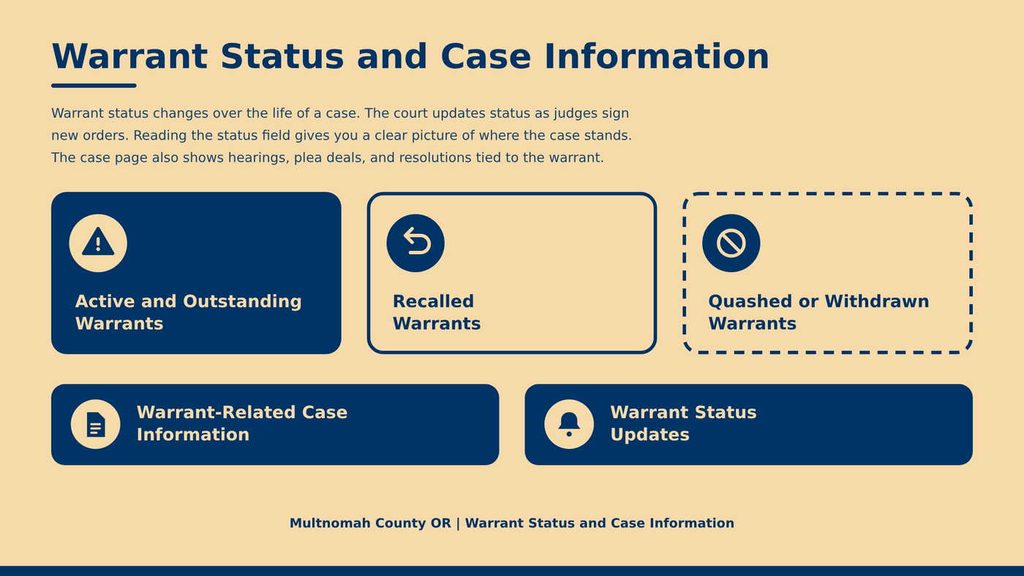
Active and Outstanding Warrants
An active warrant means it has not been resolved and police can still act on it. Outstanding is another word used for active warrants. Both terms mean the same thing — the court has not closed the case. You will see this status on any warrant that has not been recalled.
Recalled Warrants
A judge recalls a warrant when the person named on it appears in court or resolves the issue. Once recalled, police can no longer arrest on it. The court keeps the record but marks it as recalled. You can still see recalled warrants in a search, so they stay on your public record.
Quashed or Withdrawn Warrants
A quashed warrant is one that a judge has formally canceled. Withdrawn works the same way — the court drops the warrant before any action. Both mean the warrant is no longer in force. The record stays in the system but shows the change in status. Past convictions may still show on a criminal record even if the warrant is quashed.
Warrant-Related Case Information
The case page linked to a warrant shows charges, hearings, plea deals, and final rulings. You can read the full history of the case once you pull up the warrant. This data is helpful for lawyers preparing a defense or for people checking their own records. The court updates this page as new events happen.
Warrant Status Updates
Status updates happen whenever the court enters a new order on the case. Updates can take a few days to show up in the online system. If a warrant was active yesterday but the status now says recalled, the court has processed a recent order. Always check the latest update date so you know how fresh the data is.
What to Do About an Active Warrant
If you find an active warrant in your name, take action quickly. Ignoring a warrant can lead to a surprise arrest at home, work, or during a traffic stop. The court offers clear paths to resolve most warrants. Working through the system usually produces better results than running from the issue.
Confirming Warrant Information
Write down the warrant number, type, issuing court, and charges. Compare this against any paperwork or notices you have received. Call the court clerk to confirm the data before taking the next step. A small error in the record can lead to confusion, so a quick phone call clears it up.
Contacting the Appropriate Court or Authority
Reach out to the clerk’s office at the court that issued the warrant. The Multnomah County Circuit Court clerk can answer questions about criminal warrants. For municipal warrants, contact the city court that issued them. Court staff can tell you how to schedule a hearing or post bail.
Resolving a Failure-to-Appear Warrant
Call the court clerk and ask for a hearing date. Many courts allow you to appear on a walk-in basis or set a new hearing. Bring proof of identity and any documents tied to the original case. The judge may recall the warrant once you appear and address the reason you missed court.
Legal Assistance and Court Procedures
A defense attorney can speak for you in court and handle paperwork. Public defenders help people who cannot afford a private lawyer. Lawyer referral services can match you with a licensed attorney in Multnomah County. Many warrant cases end with the person paying a fine or attending a hearing, so legal help speeds up the process.
Warrant Records That Are Unavailable
Some warrant records do not show up in a public search. Several legal and practical reasons explain this. Knowing why a record is missing helps you avoid wrong conclusions. If a record should be public, the court clerk can often help you locate it.
Recently Issued Warrants
A warrant may not appear in the system for a few hours or days after a judge signs it. Court clerks need time to enter the data into the public database. If you just heard about a warrant, check again the next day. Records update faster now than in the past, but short delays still happen.
Sealed or Restricted Records
Judges can seal warrant records in some cases. Sealed records do not appear in public searches while using the public jail roster logs system to inspect available details. Common reasons include protecting witnesses, juvenile cases, or ongoing investigations. If you think a record should be public, ask the court clerk to confirm whether it has been sealed.
Incorrect or Incomplete Search Details
A search with the wrong name or number will return no results. Check the spelling and format of your entry. Use the full legal name and date of birth when you have them. If the system still shows nothing, the record may be sealed or not yet entered.
Delays in Warrant Status Updates
Court clerks update records as cases move forward, but the process takes time. A status change from active to recalled may not show up for several business days. If you acted on a warrant and the court confirmed it, the online record should match within a week. Call back if the update does not appear after a reasonable time.
Contact Information
For questions about active warrants in Multnomah County, reach the Multnomah County Circuit Court using the details below. Court staff can provide information about the appropriate procedures for warrant-related inquiries. Contact the court directly to confirm current requirements and any available case information. Please note that access to certain records may be restricted by law or court order.
Frequently Asked Questions
Finding active warrants in Multnomah County helps you stay safe and avoid unexpected legal trouble. The public warrant database shows current status, issuing court, and type of each warrant. You can check the information from any device with internet access. Knowing whether a warrant is still active or has been cleared lets you act quickly, whether you need to resolve the issue or simply confirm someone’s status.
How can I search for active warrants in Multnomah County?
Visit the Oregon Judicial Branch website and select the “Public Court Records” link. Enter the person’s name, case number, or warrant number. The results display each warrant’s status, type, and issuing court. If a warrant appears as active, call the Multnomah County Circuit Court at 503‑986‑5500, option 5, for next steps.
Where do I find Multnomah County active warrant records online?
The official source is the Multnomah County Circuit Court criminal calendar page. It links directly to the warrant search portal. Use the search box to look up names or case numbers. The page updates daily, so the information reflects the latest warrant status.
Can I check Portland OR active warrants by phone?
Yes. Call the Multnomah County Circuit Court at 503‑986‑5500 and choose option 5. A clerk will verify the name and tell you if a warrant is active, recalled, or satisfied. Have the person’s full legal name ready to speed up the call.
What should I do if I discover an outstanding warrant for myself?
Contact the court listed on the warrant record right away. Ask about payment options, court dates, or possible bond. Turning yourself in often reduces additional penalties. Keep the warrant number handy when you speak with the clerk.
How often are active warrant databases updated?
The database refreshes each business day after the court processes new filings. Changes such as recalls, payments, or dismissals appear within 24 hours. Checking the site regularly ensures you see the most current status.